In a competitive market, how quickly you can get a product from a concept to a finished component can make or break your success. Long development cycles don't just delay revenue; they also give competitors a chance to get ahead. The journey from initial design to a market-ready product is often full of potential roadblocks that can halt progress and drive up costs. Luckily, modern strategies and partnerships offer powerful ways to smooth out this path, making sure your innovations reach customers faster without cutting corners on quality.
The Challenge of Slow Development Cycles
One of the biggest obstacles in manufacturing is the time it takes between design and production. A brilliant idea on a screen doesn't always translate easily into a physical object. That's why it's important to automate jobs that can slow things down. Traditional development often works in a linear, separate way. Designers create a concept, engineers refine it, and only then do manufacturing teams check if it's actually possible to make.
This separation often leads to expensive, time-consuming redesigns when a part turns out to be too difficult or costly to produce as planned. Every change adds weeks or even months to the timeline, pushing back launch dates and straining budgets. A complex product development process that doesn't involve early collaboration is asking for delays.
Leveraging Co-Development Partnerships
A great way to stop these delays is to bring manufacturing experts into the design phase through co-development. Instead of just seeing your component manufacturer as a vendor, think of them as a key partner. When you work with a specialist early on, their team can give crucial feedback on materials, tolerances, and production methods before your designs are even final.
This proactive approach helps you design for manufacturability right from the start. For example, working with a micro-precision manufacturing specialist like Tecan can offer insights into processes like chemical etching, ensuring your design for a complex metal part is both innovative and something that can be made at scale. This early alignment prevents expensive late-stage changes and significantly shortens the overall timeline.
Prototyping for Speed and Accuracy
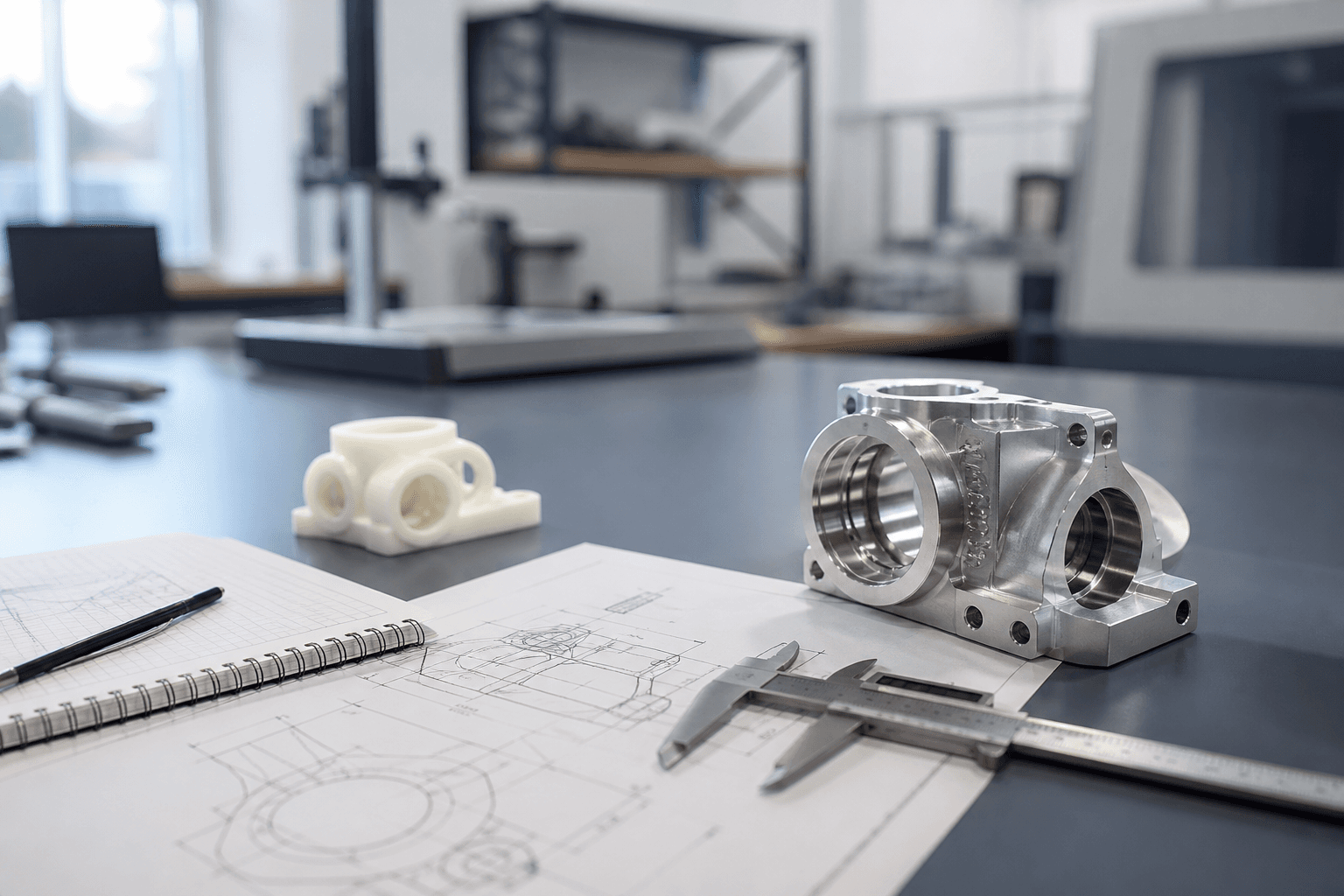
Rapid prototyping is a vital tool for quickly accelerating product development and testing ideas. Creating physical models lets your team check a component's form, fit, and function in a real-world setting. This hands-on feedback is much more valuable than any digital simulation alone. Modern prototyping isn't limited to one method; it can involve 3D printing for plastic models, CNC machining for strong metal parts, or even advanced chemical etching for creating thin, precise metal prototypes.
The main goal is to get a tangible part in hand as fast as possible to spot design flaws, test usability, and confirm engineering assumptions. Each quick iteration brings you closer to a perfect final design without the big commitment and expense of mass production tooling.
Multi-Technology Approaches to Production
Relying on just one manufacturing technology can limit your design options and slow you down. A better approach is to consider using multiple technologies, combining different processes to get the best result. A component might need the strength of a machined base, but also intricate features or a specific surface finish that another method can achieve best.
For instance, a medical diagnostic device might have its main housing made through injection molding, but a crucial internal part, like a microfluidic plate, could be made using precision etching. Combining technologies helps you optimize for speed, cost, and performance, creating a final product that's better than what any single process could deliver alone.
Reducing Risk in Product Launches
Speeding up the development cycle isn't just about going faster; it's about reducing risk. Every delay, redesign, and production hiccup introduces uncertainty and potential problems. By using strategies like co-development, rapid prototyping, and multi-technology production, you systematically remove risks throughout the process. Early manufacturing feedback stops you from creating designs that can't be made. Physical prototypes confirm functionality long before you invest in expensive tooling. This disciplined, integrated approach ensures that when you're ready to launch, you have a product that has been thoroughly checked and is ready for the market. It builds confidence not only in your team but also in your final product's ability to succeed.
Implementing these strategies helps transform your product development from a slow, linear process into a dynamic, collaborative effort. Focusing on early partnerships and smart technology choices helps you bring better products to market faster and more reliably.