If you run a business, mitigating danger is paramount. Both the people who work with you and your customers deserve to know that the environment in which they conduct business isn't a risk to their safety, and you need to do your utmost to protect that right.
Of course, 'safety' covers a lot of different areas – both physical and digital in nature. In the modern age, there are many considerations that need to be made to ensure you're ticking the boxes, and it'll take a lot of effort to get there.
The matter can naturally be a little stressful for you to puzzle through, and perhaps you're at that stage now. There's always the worry that something has been overlooked or you've forgotten an important element that could compromise your operations.
If you're currently struggling to get to grips with things, this article is here to help you out. Here are five safety must-haves for you to go through methodically and get on track.
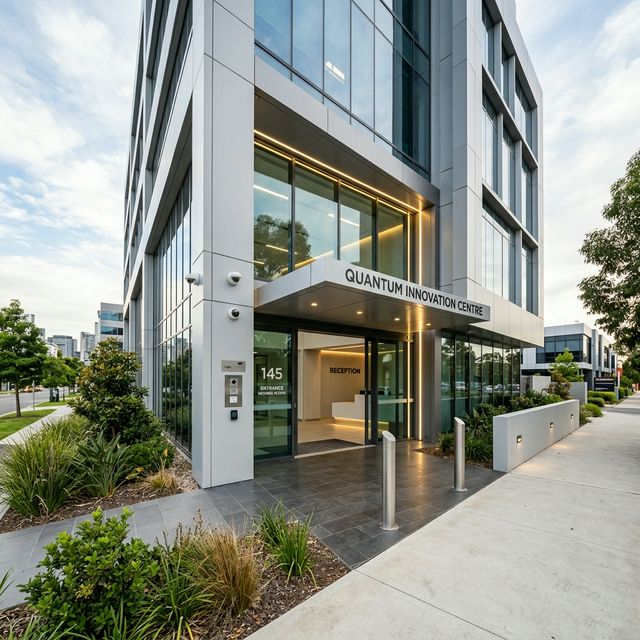
1. Fire Safety Systems
Fire is the health and safety matter most people's minds go to when they think of the topic, and that's with good reason. Even a small fire can cause devastating damage across a wide area, endangering lives and generally destroying everything in its path.
As such, it's essential to have a robust fire safety system in place. This will encompass modern fire alarms, extinguishers, sprinkler systems, and fire-rated commercial doors.
It's also critical to have a fire safety procedure in place. This means regular drills with a well-thought-out exit strategy for everyone in the building.
2. Environmental Monitoring
On the opposite end of the spectrum, environmental hazards are a safety concern that barely anyone really thinks about. Unlike fire risks, the dangers aren't quite as clear, so there are often holes in a business's strategy.
The biggest concern is air quality. This is especially important if you're operating amidst hazardous chemicals and toxins. You should have smart sensors up to monitor the air at all times, and depending on what you're dealing with, an industrial-grade ventilation system installed.
There are also matters such as having proper lighting implemented to promote mental well-being (this has a surprisingly big impact) and ensuring ergonomic furniture is used to support good posture.
3. CCTV and Access Control
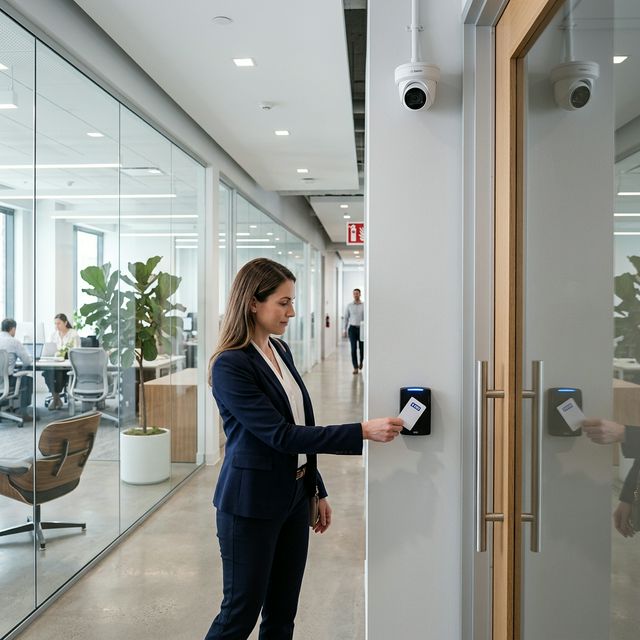
A big part of workplace safety revolves around the accessibility of your premises. You should tightly control who is able to freely come in and out of the building with an access control system, and a modern CCTV system should monitor all key areas 24/7 to ensure everything is as it should be.
Regarding access control, if you have a large staff, key cards are indispensable. Modern access control enables you to segment the building into different tiers, making sure that only the people who are authorised can access a given area. This goes a long way in guaranteeing everything continues to function properly, and that no one ends up somewhere they aren't fully trained to be in (which could be a hazard to both themselves and others).
4. Cybersecurity Infrastructure
An increasingly important element of safety at work is cybersecurity. Nearly all businesses are moving towards wholly digital systems for their day-to-day operations, and while this brings with it a great deal of convenience, it also makes for a bigger cybersecurity risk.
If a large portion of your work is conducted using cloud-based or server-based systems, it's key to have a cybersecurity firm regularly perform penetration testing to look for holes that hackers and thieves could exploit, and then patch them before they become a problem.
You could also look into 24-hour monitoring services for extra peace of mind.
5. Safety Communication Tools
And finally, there are safety communication tools. Using signs, posters, and standardized symbols to communicate hazards – as well as to teach proper operating procedures – is invaluable. Unlike many of the other elements described in this article, they're also very cheap to implement. Many governing bodies actually give these out for free, so get in contact with those involved in health and safety at the regional and national levels to discover what's available.
It's important to remember, however, that materials will need updating semi-regularly to reflect the most current health and safety practices.
Wrapping Up
Hopefully, this article helps you navigate the often bewildering field of workplace health and safety. It'll take time and patience to get everything sorted, so go through each of the above carefully to ensure no stone is left unturned.